Pinpoint Intravitreal Injection Coding
- By Samantha Sirsky
- In Coding
- July 1, 2024
- 4 Comments
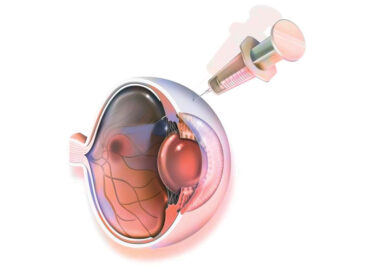
Precision is necessary to code and bill these ophthalmology claims correctly.
Most people would be horrified if you tell them they need medicine injected into their eyes. For an ophthalmology practice with a retina specialist, however, intravitreal injections are as common as they come. With new medications, new modifiers, and prior authorization requirements, this can feel like navigating a minefield for billers and coders. But by keeping up with coding changes and payer policy updates, this process can be much easier than breaking the news to a patient that they need the treatment. Let’s go over recent changes that affect coding and billing for retina specialists.
Intravitreal Injection Coding Basics
There are many different medications retina specialists may use for an intravitreal injection, and new ones are emerging all the time. The HCPCS Level II codes differ and change frequently, but the CPT® code for administering the drug remains the same.
67028 Intravitreal injection of a pharmacologic agent (separate procedure)
If the patient needs injections bilaterally, some physicians prefer to do each eye on a separate day. In this case, or in the event a patient only receives an injection in one eye, append the corresponding modifier LT Left or RT Right to the injection code.
If the physician performs bilateral injections at one visit, append modifier 50 Bilateral procedure to the injection code. When appending a bilateral modifier, continue to only bill one unit. The modifier already indicates to the payer that the treatment was done on two distinct body parts (right eye/left eye). Reimbursement is 150 percent of the allowed amount for this code.
The Dilated Exam
To confirm the need for continued injections or start of a treatment plan, a physician needs to perform a dilated exam. Most physicians prefer to schedule a patient to return to the office for a dilated exam, when necessary, in between their regular injection schedules. If the exam is being performed solely to confirm the need for treatment and the treatment is done the same day, the exam is not separately billable.
Occasionally, a patient requires active treatment in only one eye, but the physician needs to do a dilated exam on the other eye the same day for a separate diagnosis. In this case, it would be appropriate to bill an evaluation and management (E/M) code with a modifier 25 Significant, separately identifiable evaluation and management E/M service because the exam is unrelated to the injection being performed that day.
J Codes for Intravitreal Injections
HCPCS Level II coding for the medication injected is often the most troublesome part of the entire process for a retina practice. Between prior authorization requirements, the high cost, and keeping track of new codes, this can turn into a financial minefield.
New medications are not immediately assigned a permanent HCPCS Level II code. An example of this from 2022 is faricimab-svoa, or Vabysmo. Practices used J3590 Unclassified biologics to bill this medication initially, until it was assigned its permanent J code, J2777 Injection, faricimab-svoa, 0.1 mg, in October 2022. Without proper experience, support, and follow-up, getting paid for J3590 was difficult, as the drug is very costly. For patients who had commercial or Medicare Advantage plans that required prior authorization for this code, and prior authorization was obtained for J3590 and not updated for the new J2777 code, payment was being denied.
Eylea HD (aflibercept) is a more recent example of this. Eylea has been used by practices for years to treat patients with wet age-related macular degeneration, diabetic macular edema, and diabetic retinopathy. Eylea HD boasts equivalent results with longer intervals between injections, which would be an easy sell for any patient. The doctor still needs to stick a needle in the patient’s eye, but they can go four months before needing to repeat the process, rather than returning monthly. Eylea HD was assigned a permanent J code — J0178 Injection, aflibercept, 1 mg — in April 2024.
Units and Prior Authorization Tips
Another thing to keep track of is the units billed for each J code. An unclassified code such as J3590 is always billed with one unit. Other medications are not as easy. Bevacizumab, or Avastin, for example, is also always one unit. However, some payers require J9035 Injection, bevacizumab, 10 mg and some require J7999 Compounded drug, not otherwise classified.
Eylea is billed as two units, but Eylea HD is eight units with its permanent J code. Vabysmo is billed as J2777 with 60 units. If an injection is done bilaterally, these J codes are billed on two lines and the units remain the same for each.
If a payer requires prior authorization for one of these codes, always submit for enough units to cover each visit. You wouldn’t want to get a prior authorization approved for a patient to receive Vabysmo only to realize they approved two units (one per eye) when you will be billing 120 each visit.
Don’t Forget Modifier JZ
Medicare started requiring modifier JZ Zero drug amount discarded/not administered to any patient in July 2023 to indicate no wastage of a single-dose vial medication that was injected. Modifier JW Drug amount discarded/not administered to any patient had already existed to indicate wastage. Initially, it seemed modifier JZ would not be required for compounded drugs such as Avastin; however, Medicare does accept modifier JZ appended to J7999 for Avastin. Commercial payers do not always immediately adopt new modifiers or codes required by Medicare, but our practice has not yet found a payer that denied a claim that had -JZ appended to the J codes.
Helping Patients Afford Their Medication
Most payers do not cover the cost of intravitreal injections in full for patients until they meet a yearly deductible or out-of-pocket requirement. When a single treatment of a medication can cost thousands of dollars, any patient responsibility on the visit can turn out to be unaffordable. There are many different funding programs in place to assist with the cost, so that patients can still get the treatments they need.
For patients with commercial insurance, the companies will have their own funding programs, such as Eylea4U for Eylea and EyleaHD or Genentech copay assistance for Vabysmo and Lucentis. Patients with Medicare Part B (including patients with Medicare Advantage plans) or other government insurance, such as Tricare or Medicaid, can be enrolled in funding through the non-profit Good Days, an organization that helps patients with chronic illnesses. Companies such as Eylea4U and Genentech also have options to help treat patients who are uninsured or under-insured with income-based approval to receive the medication for free.

- Patient Advocacy in the Billing Office - July 1, 2024
- Pinpoint Intravitreal Injection Coding - July 1, 2024
- Code Cataract Surgery With Clarity - March 1, 2024



This has incorrect information. J0178 is for regular Eylea (aflibercept) and J0177 is for Eylea HD (aflibercept HD).
Thank you. We will review this and make any necessary corrections.
If a patient is following an ophthalmologist who started working at a new facility could the patient still bring their own eye injection to that new practice for the provider to use?
Your question is beyond the scope of what we can answer.