When the Medical Record Contains Too Much Information
- By Renee Dustman
- In AAPC News
- February 10, 2025
- 3 Comments
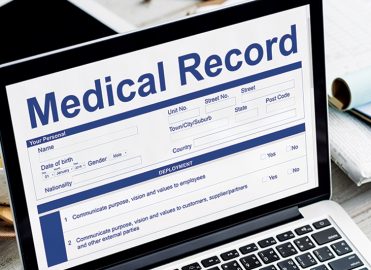
How to get rid of note bloat in the EHR.
For decades, physicians have been told to document every detail of their patient visits in the medical record in hopes of giving payers what they want: proof that their services were medically necessary. But the electronic health record (EHR) has changed the way physicians document visits. EHRs were supposed to make it easier for physicians — and they have to some extent — but they have also created new problems such as “note bloat.” Now, physicians are being told to document less.
Well, maybe not less — the note still has to support the service — just differently.
In the article “Streamline E/M Documentation by Targeting Note Bloat,” (2/12, Robeznieks), family physician Kevin D. Hopkins, MD, talks about how documentation has changed since the implementation of EHRs and the American Medical Association’s (AMA’s) 2021 evaluation and management (E/M) guidelines. He also recommends a solution for note bloat.
The Problem With EHRs
EHRs make it much easier to populate a patient’s medical record with data using the copy and paste functions. Copying and pasting, or cloning, documentation from one note to another is a well-known and often-discussed topic. This practice is partially responsible for note bloat, and it also creates potential for inaccuracies in documentation.
The AMA recommends physicians put their documentation practices through a “de-implementation process” to “remove the sludge” created by cloning. The process includes addressing note bloat by “reducing links imbedded in visit note documentation templates that automatically pull in data from other parts of EHR ….”
Templates are another concern with EHRs. “We have a lot of note templates that will pull in past medical history, past surgical history, past family history, past social history, and even a long problem list that’s stored elsewhere in the EHR and it makes our notes unnecessarily long,” Dr. Hopkins explained.
The AMA recommends physician practices:
- Recreate or update documentation templates to include only medically necessary information in the medical record.
- Delegate work across the care team.
- Build relationships and work with billing and coding experts.
“We don’t expect physicians to be professional billers and coders,” Dr. Hopkins said. “Leave it to the professionals, but ask questions, invite them to your physician meetings to give a talk.”
Education Is the Solution
Coders are encouraged to educate physicians on required documentation in the medical record but be prepared. Physicians need facts, so you will need to show them the official rules and regulations to back up your statements.
Learn about E/M guidelines and documentation requirements at AAPC’s HEALTHCON, April 6-9, in Orlando, Florida. Sessions include “Teaching Providers Medical Decision Making for Coding,” an open mic “E/M Panel,” “Enhancing Provider Education: A Focus on E/M Coding,” and “Confident and Concise: Developing Presentation Skills for Educators.” The full agenda is available online.

- PLA Code Changes for CPT® 2027 - November 5, 2026
- CMS Issues October 2026 ASC Payment Update - November 4, 2026
- NCA Reconsiders Hepatitis C Screening Coverage - October 15, 2026



I reviewed the medical records on a patient sent to my practice; four consecutive notes on the patient’s complaints was word-for-word identical, although the assessment changed. In another instance the patient had complained of hip and knee pain to their pcp; information on gas-vs-electric heat, functioning smoke detectors, well vs city water, and presence of pets was found in the history. What was absent was information on the patient’s complaint, as well as any musculoskeletal examination. The reason the patient was sent was that an ANA was weakly positive; the only x-rays were done was a chest x-ray.
Providers are increasingly trained to develop notes to meet MIPS and meanful use guidelines, rather than providing care to the patients. Registry points seem to be more important to medical administrators than actually taking care of the patients. We need to get back to the attitude of “Its the patient, stupid.”
ATTN: Renee Dustman. Would you consider preseinting this topic and tips at a Virtual AAPC local chapter meeitng? We would love to host you and this topic, which is so underated espicially since MIPS tracking took over charting! What is relevant to code these charts vs non-essential data, ect… Please contact the AAPC Melbourne FL LC. THANK YOU!
Hi Heather, I’ll send you an email.