Deliver Proper Coding for Enteral Nutrition
- By Gabriel Aponte Moberg
- In Billing
- October 1, 2025
- Comments Off on Deliver Proper Coding for Enteral Nutrition
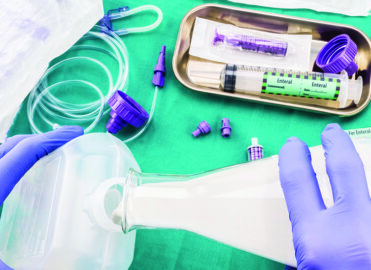
Medicare coverage, medical necessity, and supplies all weigh in.
Enteral nutrition is a method of delivering nutrients directly into the gastrointestinal (GI) tract when a patient cannot meet nutritional needs orally but still has a functioning digestive system. Unlike parenteral nutrition, which bypasses the GI tract entirely by delivering nutrients intravenously, enteral nutrition utilizes the absorptive capabilities of the gut. This approach is typically preferred because it maintains the physiological functions of the digestive system, reduces the risk of complications such as infections, and is generally more cost-effective.
Enteral feeding can be administered through various routes, including nasogastric tubes, gastrostomy, or jejunostomy feeding tubes. These methods employ different techniques such as syringe feeding, which delivers nutrition rapidly but may increase the risk of aspiration; gravity feeding, which uses a drip system; and infusion pumps, which regulate the feeding rate into the tube. While oral enteral nutrition is clinically used, Medicare does not cover oral administration or related supplies and equipment.
Patients requiring enteral nutrition often present with conditions such as head and neck cancers (particularly post-reconstructive surgery), severe dysphagia following cerebrovascular accidents, advanced neurodegenerative diseases like amyotrophic lateral sclerosis (ALS), inflammatory bowel diseases, short bowel syndrome, cystic fibrosis, chronic pancreatitis, and advanced liver disease.
Medicare Coverage
Enteral nutrition is covered under Medicare’s prosthetic device benefit when specific criteria are met. The beneficiary must require enteral nutrition due to a permanent impairment, either involving the structures that allow food to reach the small bowel or the small bowel itself, which results in the inability to digest and absorb nutrients. However, the term “permanent” does not mean the condition is irreversible or lifelong. If the patient’s record, including the judgment of the treating provider, indicates that the impairment will “be of long and indefinite duration,” then this criterion is considered met. In addition, Medicare specifies that adequate nutrition must not be achieved through dietary modifications or oral supplementation alone. Medicare outlines specific coverage rules regarding nutrients, equipment, and supplies.
Nutrients
Semi-synthetic intact protein formulas and protein isolates, billed with either HCPCS Level II code B4150 or B4152, are appropriate for most patients. In contrast, special enteral formulas, such as those described by B4153 and B4162, require detailed documentation explaining why standard formulas cannot meet the beneficiary’s metabolic needs. A simple diagnosis is insufficient to justify a specialty formula; supporting documentation must include failed attempts of standard formulas or metabolic abnormalities that require a specialty product.
Medicare does not cover certain items under enteral nutrition services. Non-covered products include food thickeners (B4100), baby food, and other blenderized grocery items, electrolyte-containing fluids (B4102 and B4103) (as these are not intended for maintaining weight and strength), self-blenderized formulas, and enteral formula additives (B4104), as the base enteral formula codes already include all nutrient components.
Equipment and Supplies
An enteral pump (B9002) is covered only when justified by complications related to syringe or gravity feeding methods. Documentation must specify the clinical need for a pump such as reflux, aspiration risk, severe diarrhea, or administration rates requiring controlled delivery. In-line digestive enzyme cartridges (B4105) are covered only for beneficiaries diagnosed with exocrine pancreatic insufficiency or other specified conditions.
Coding and Billing
As we alluded to above, HCPCS Level II B codes are used to report enteral nutrition services. These codes fall into three categories:
- Supplies and equipment (B4034-B4088)
- Formulas and additives (B4100-B4162)
- Infusion pumps and miscellaneous supplies (B9002-B9999)
Supply kit codes, such as B4035, bundle all necessary supplies (e.g., syringes, bags, tubing, dressings) for one day of enteral nutrition administration. These bundled supplies cannot be billed separately, and only one unit of service per day is permitted.
Additionally, Medicare limits the frequency of feeding tube replacement. Coverage for nasogastric tubes (B4081-B4083) is limited to no more than three in a three-month period. For gastrostomy and jejunostomy tubes (B4087 and B4088), coverage is limited to one replacement every three months; additional replacements within the same time period are not covered.

For special nutrient formulas billed under codes B4149, B4153, B4154, B4155, B4157, B4161, and B4162, the product must appear on the PDAC Product Classification List (PCL). If it is not listed, suppliers must seek guidance from PDAC to ensure correct coding.
Modifiers
Modifiers are essential for coding enteral nutrition. The BA modifier should accompany code E0776 when an IV pole is used. The BO modifier is used for oral administration, though this is not covered by Medicare. When coverage criteria are not met, suppliers must use Advance Beneficiary Notice (ABN) modifiers GA, GY, or GZ to communicate expected denials. The KX modifier confirms that all criteria have been met and the documentation is available upon request. Codes billed without KX, GA, GY, or GZ modifiers will be rejected.
For enteral pumps, additional modifiers such as RR (rental), NU (purchase), KH (initial claim for rental), and MS (maintenance after 15 months) must be applied as appropriate.
Formula Calculation and Billing Units
Proper unit calculation is crucial. One unit equals 100 calories. To determine the correct number of units on the bill, divide the total ordered daily calories by 100 to get units per day (UPD). For example, 1,500 calories per day / 100 calories = 15 UPD. Then, multiply the UPD by the number of service days to obtain the total billable units. For example, 15 UPD x 30 days = 450 units. The result, 450, is the number of units that should be included in the claim.
Additional Documentation and Recordkeeping Guidelines
According to a Medicare Fee-for-Service Supplemental Improper Payment Data 2023 report, insufficient documentation accounted for 52.8 percent of improper payments for enteral nutrition, medical necessity (30.6 percent), and 6 percent of the cases did not have an actual document to support the services. As with other services, documentation is key when it comes to supporting rendered services.
Suppliers must have a signed Standard Written Order (SWO) before billing enteral services. For items requiring a Written Order Prior to Delivery (WOPD), this must be obtained before delivery. Additionally, suppliers must maintain Proof of Delivery (POD) documentation.
The treating practitioner’s documentation and the durable medical equipment supplier’s documentation must demonstrate the medical necessity for the ordered items. The medical record should include the beneficiary’s diagnosis, clinical course, prognosis, extent of functional limitations, and prior interventions. Documentation must also demonstrate that the impairment is expected to be of long and indefinite duration. For specialty formulas or enzyme cartridges, the documentation must detail the failure or unsuitability of standard formulas and provide clinical justification.
Resources:
Enteral Nutrition – Policy Article A58833

- What Does the Problem List Have to Do With Risk Adjustment? - December 1, 2025
- Deliver Proper Coding for Enteral Nutrition - October 1, 2025
- 2025 Brings New Telemedicine Codes - June 2, 2025