Remove the Coding Confusion With Drainage and FBR Smarts
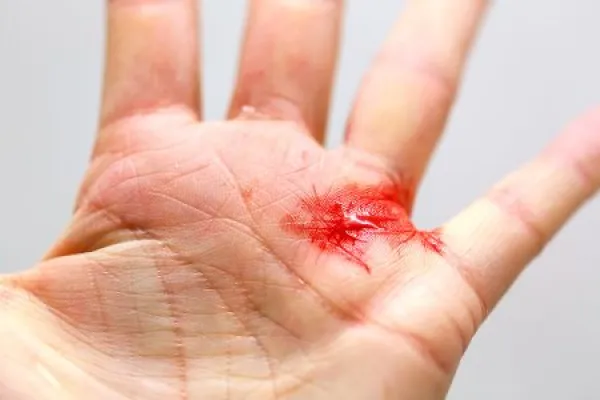
Do you know what makes a foreign body removal procedure simple versus complicated? If documentation includes phrases such as “removal” or “drained,” coders should consider applying the appropriate CPT® code for foreign body removal (FBR) and drainage procedures. But how do you distinguish between a simple or complicated FBR, and what if the physician performs a separately codeable service during the same encounter? The CPT® code range 10120 (Incision and removal of foreign body, subcutaneous tissues; simple) to 10160 (Puncture aspiration of abscess, hematoma, bulla, or cyst) covers FBR and drainage procedures. Let’s review some examples to gain a better understanding of how clinicians in emergency departments (EDs) decide if a patient needs an FBR procedure, and how to select the most appropriate code in a variety of FBR scenarios. Understand When To Report 10120 and 10121 The decision to remove a foreign body generally begins with the patient’s history and physical examination. The physician should document the nature and location of the object, how deeply it is embedded, symptoms such as pain or swelling, and whether there are signs of infection, neurovascular injury, or other complications. CPT® codes 10120 and 10121 (… complicated) both fall under the range of incision and drainage (I&D) procedures on the skin, subcutaneous and accessory structures, which describes incision and removal of a foreign body, such as a fishhook, from the lower layer of skin. While 10120 applies to uncomplicated procedures, 10121 describes situations where a physician performs an FBR from the lower layer of skin, but extensive dissection, imaging guidance, or layered closure complicates the removal. Imaging can help locate a foreign body when a clinician cannot readily identify or palpate the object. For example, plain radiography may help identify glass or metal, while ultrasound may help locate other objects. However, do not assume that imaging is a prerequisite for reporting 10120 or 10121. If the physician can identify and remove the foreign body based on examination, imaging may not be necessary. Know the Differences Between Simple and Complicated FBRs The difficulty of the removal determines whether a coder should apply 10120 or 10121. Follow the physician’s documentation, and do not make assumptions based on the foreign body’s type or size. Further, do not automatically assign 10121 if the patient received imaging. Generally, a simple removal involves an easily accessible foreign body that the physician can remove through a straightforward incision with relatively little dissection or manipulation. A complicated removal, however, may involve a deeply embedded or difficult-to-access object, extensive dissection, significant manipulation, difficulty locating the object, or other circumstances that substantially increase the work involved. Let’s review an example of a complicated FBR, where the patient’s chief complaint is glass in their right hand. The patient presents to the ED after cutting their right palm on a broken drinking glass. They report persistent pain and believe a piece of glass remains in the wound. The ED physician performs an exam and documents a palpable foreign body deep within the patient’s subcutaneous tissue. An X-ray confirms that there is a glass fragment in the patient’s hand. The physician administers a local anesthetic, then makes an incision and performs extensive dissection and exploration to locate and remove the deeply embedded fragment. The physician irrigates and closes the wound. In this case, report the following: Keep Separate Services in Mind During FBRs Although routine wound care and local anesthetic administration are often documented as part of the procedure, they are not separately reportable. In some cases, however, the physician may perform an additional service that warrants separate coding. Check out these examples: Distinguish Between 10140 and 10160 While 10140 (Incision and drainage of hematoma, seroma or fluid collection) describes incision and drainage of a hematoma, seroma or fluid collection, 10160 (Puncture aspiration of abscess, hematoma, bulla, or cyst) describes puncture aspiration of an abscess, hematoma, bulla, or cyst. Therefore, a coder should focus on both what the physician drained and the physician’s technique to determine the most appropriate code. As with FBR procedures, coders may separately report an E/M service with modifier 25 appended if the physician performs a significant, separately identifiable E/M service in addition to the procedure. Other potentially separately reportable services include imaging guidance, diagnostic imaging, immunizations, or treatment of a separate condition during the same encounter. Remember the bottom line: The documentation should include the site and nature of the patient’s treatment, the physician’s access method, what the physician removed or drained, and how difficult the service was. These factors will guide you to the correct CPT® and ICD-10-CM codes. Michelle Falci, BA, M Falci Communications LLC, Contributing Writer