Settle Avulsion vs. Excision Question Before Choosing Code
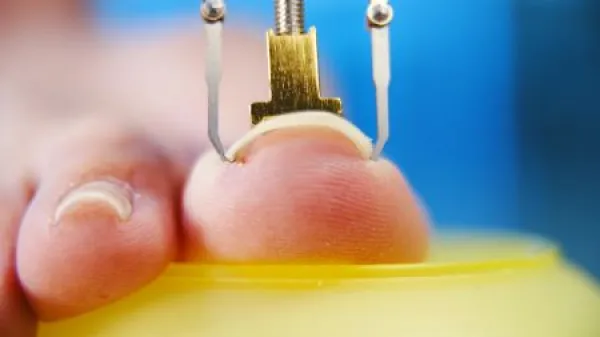
Question: A patient reports to the emergency department (ED) with an ingrown right great toenail. The ED physician performs a digital block using lidocaine without epinephrine. A tourniquet is put in place, and the nail is cleaned with betadine solution. The ED physician then elevates the nail with a nail elevator and removes “about 25 percent” of the medial nail without incident, according to the notes. The physician uses scissors to cut down excessive granulation tissue, then cauterizes the area with silver nitrate sticks. The nail matrix is ablated with phenol solution. The tourniquet is then removed and the wound is dressed. Is this considered an excision or an avulsion, and how should I report the procedure? Kentucky Subscriber Answer: In this scenario, the procedure you described is an excision and you will report 11750 (Excision of nail and nail matrix, partial or complete (eg, ingrown or deformed nail), for permanent removal) for the toenail excision, according to Nate Felt, MS, CPC, ATC, PTA. Remember to append modifier T5 (Right foot, great toe) to 11750 to specify the toe if the payer requires it. During a toenail excision, “the physician removes all or part of the toenail, including the nail plate and matrix permanently. The nail plate is bluntly dissected and detached from the nail matrix. The nail matrix is destroyed using chemical ablation, a carbon dioxide laser, or electrocautery,” explained Felt in a recent AAPC webinar. This is different from an avulsion, which you would code with 11730 (Avulsion of nail plate, partial or complete, simple; single) instead. During a toenail avulsion, “the physician bluntly dissects the nail plate from the nail bed. Any bleeding is cauterized, and the digit is bandaged,” said Felt. Providers can use excision or avulsion for ingrown nails, so it pays to know the difference between 11750 and 11730. Chris Boucher, MS, CPC, Senior Development Editor, AAPC