
Know Steps to Follow for Arthrocentesis Coding
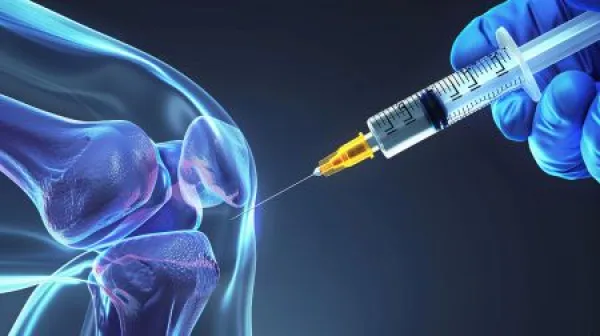
Physician will start with E/M, imaging to decide if service is necessary. Arthrocentesis is a common minor procedure for many pain management (PM) clinics. Using a needle placed into a joint or bursa, the physician withdraws fluid, injects a medication, or does both in the same visit. The procedure itself is straightforward, but reporting it accurately depends on a few details the documentation has to make clear: which joint was treated, whether imaging was used to guide the needle, and what else the physician did during the encounter. Once those details are understood, the small family of arthrocentesis CPT® codes falls into place. Read on for more information on coding for patients who receive arthrocentesis. The decision to perform arthrodesis stems from the clinical evaluation. During an office or other outpatient visit (99202-99215 [Office or other outpatient visit for the evaluation and management …], or the corresponding inpatient, observation, or emergency department [ED] codes used in other settings), the physician examines the patient, weighs the findings, and decides whether aspiration or injection is warranted. That decision, and the reasoning behind it, is what establishes medical necessity, so it belongs in the note. The purpose of the procedure shapes the diagnosis coding. A diagnostic aspiration draws synovial fluid to determine the cause of an effusion, while a therapeutic one relieves a symptomatic joint and delivers a corticosteroid, anesthetic, or viscosupplement. In many encounters the physician does both at once. Report the imaging and laboratory studies that support the decision alongside the procedure. Radiographs are usually the first study and confirm effusion, fracture, chondrocalcinosis, or degenerative change. Choose the appropriate code for radiograph based on encounter specifics. When the physician orders a dedicated diagnostic ultrasound separate from any guidance used during the procedure itself, report it separately with 76881 (Ultrasound, complete joint (ie, joint space and peri-articular soft-tissue structures), real-time with image documentation) or 76882 (Ultrasound, limited, joint or focal evaluation of other nonvascular extremity structure(s) (eg, joint space, peri-articular tendon[s], muscle[s], nerve[s], other soft-tissue structure[s], or soft-tissue mass[es]), real-time with image documentation), provided the record includes images and interpretation. The codes for arthrocentesis come from the 20600 (Arthrocentesis, aspiration and/or injection, small joint or bursa (eg, fingers, toes); without ultrasound guidance) through 20611 (Arthrocentesis, aspiration and/or injection, major joint or bursa (eg, shoulder, hip, knee, subacromial bursa); with ultrasound guidance, with permanent recording and reporting) range, and the joint being treated is what drives the coding choice. Because the codes are defined by the size of the joint or bursa, that is where code selection begins. Size is an anatomic matter, determined by the joint entered rather than by the needle the physician uses or the amount of fluid they withdraw. The descriptors name representative joints rather than every possibility, which is unavoidable given that the body contains roughly 350 of them. For joints the descriptors do not name, consider this direction: The other factor on the table is imaging guidance, though in practice, most arthrocentesis is performed without it, meaning you’ll choose among 20600, 20605 (Arthrocentesis, aspiration and/or injection, intermediate joint or bursa (eg, temporomandibular, acromioclavicular, wrist, elbow or ankle, olecranon bursa); without ultrasound guidance), and 20610 (Arthrocentesis, aspiration and/or injection, major joint or bursa (eg, shoulder, hip, knee, subacromial bursa); without ultrasound guidance) in the majority of cases. When the physician does use ultrasound to guide the needle, report the procedure with 20604 (… with ultrasound guidance, with permanent recording and reporting), 20606 (… with ultrasound guidance, with permanent recording and reporting), or 20611 instead. These ultrasound codes carry a documentation requirement written into the code descriptor itself: a permanent image must be recorded and a written report produced. Since that language is part of the CPT® descriptor, the requirement applies nationally rather than being the rule of any one payer, although payers may layer on their own documentation or medical necessity expectations. The images stay in the patient record and are made available if requested; don’t send them in with the claim. If the provider uses ultrasound but it is not properly documented, use 20600, 20605, or 20610, as appropriate. Exceptions: While you’ll observe these reporting rules for ultrasound, you’ll code other guidance modalities differently: when fluoroscopy, CT, or MRI directs the needle, report 20600, 20605, or 20610 and add the guidance separately with +77002 (Fluoroscopic guidance for needle placement (eg, biopsy, aspiration, injection, localization device) (List separately in addition to code for primary procedure)), 77012 (Computed tomography guidance for needle placement (eg, biopsy, aspiration, injection, localization device), radiological supervision and interpretation), or 77021 (Magnetic resonance imaging guidance for needle placement (eg, for biopsy, needle aspiration, injection, or placement of localization device) radiological supervision and interpretation). One point applies regardless of joint or guidance: A single unit represents the joint no matter how much is done within it. Aspirating and then injecting the same joint in one session is still 1 unit, not 2. Arthrocentesis often shares the visit with other billable supplies or services, each reportable when the documentation supports them. You can report the medication your physician injects with its HCPCS Level II code and the correct units: J3301 (Injection, triamcinolone acetonide, not otherwise specified, 10 mg) or J1010 (Injection, methylprednisolone acetate, 1 mg). Remember that J1010 replaced per-vial codes J1020 (Injection, methylprednisolone acetate, 20 mg), J1030 (… 40 mg), and J1040 (… 80 mg) as of April 1, 2024. You might also report an E/M service with modifier 25 (Significant, separately identifiable evaluation and management service by the same physician or other qualified health care professional on the same day of the procedure) when it is significant and separate from the procedure, as when the evaluation is what led to the decision to aspirate rather than the patient arriving for an injection that was already planned. The ordering of additional services during the visit, such as imaging, physical therapy, or a prescribed medication, is further evidence that the physician’s work went beyond the procedure itself. Here are a few other pointers to keep in mind on your arthrocentesis claims: Because every code depends on what the record says, the note carries real weight. It should identify the joint and laterality clearly enough to support the size category being reported; state whether the physician aspirated the joint, injected it, or both; and name any substance injected with its concentration and dose so the drug code and units can be assigned. It should also record the volume and character of any fluid obtained and where it was sent. When ultrasound guides the needle, a note that the permanent image was captured, retained, and interpreted is what supports the ultrasound code. Medical necessity, documentation of a separately identifiable E/M when one occurs, and a distinct entry for each joint the physician treated complete a record that stands behind the codes you’ll use when a patient requires arthrocentesis. Jennifer McNamara, CPC, CVBA, CRC, CPMA, CDEO, CEMA,Identify When Arthrocentesis Is Indicated
Check out the Arthrocentesis Codes
Look for Additional Codeable Services
Dig These Documentation Tips
COSC, CGSC, COPC, CPC-I, Contributing Writer
