Removal Is Included in This Halo Application
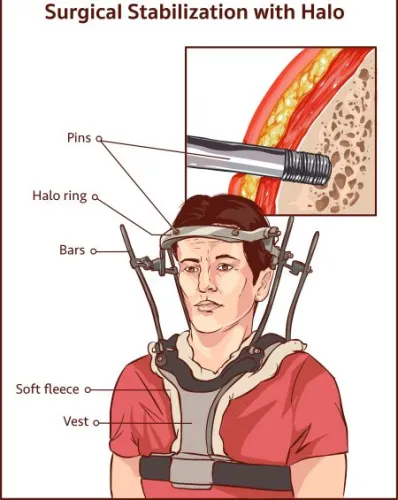
Question: A 42-year-old patient who was in a motor vehicle collision has severe neck pain with inability to safely maintain cervical alignment. The encounter notes indicate a stable burst fracture of C1. The patient also has significant muscle spasms in the cervical area. The surgeon determines that rigid external immobilization is necessary to maintain cervical alignment and protect the spinal cord while definitive treatment is planned. How should I report this encounter? Codify Subscriber Answer: What you are describing is a cranial halo application. You’ll report one procedure code and two ICD-10-CM codes for this encounter. On the claim, you will report the following: Remember: The 20661 code descriptor states “including removal.” Therefore, when the surgeon removes the halo, you won’t be able to submit a code for the service unless there are unusual circumstances. Kalie Bothma, CPC, CEDC, CSAF, Contributing Writer