Refresh Your Femoral Fracture Know-How
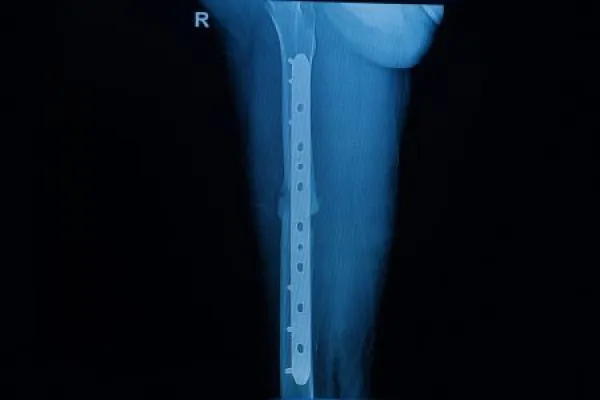
The location, type, and treatment will all determine correct coding choices. Femoral fractures predominantly occur in two distinct age groups: younger individuals involved in high-energy incidents, and older individuals who experience unexpected falls. Your responsibility, from diagnosis to surgery, is to precisely document the services provided by surgeons and imaging specialists. By considering the coding tips offered here on femoral fracture coding, you'll boost your ability to effectively code claims for these patients and get your claims paid before their recovery is complete. Identifying the Fracture Before treatment begins, the practitioner will need to identify the femoral fracture. This typically starts with an evaluation and management (E/M) service along with imaging services like X-rays or MRI scans. Here are the codes you’ll most commonly report for those services: For the physical exam the practitioner performs before surgery or treatment, you’ll report an E/M code, likely 99202 (Office or other outpatient visit for the evaluation and management of a new patient, which requires a medically appropriate history and/or examination and straightforward medical decision making. When using total time on the date of the encounter for code selection, 15 minutes must be met or exceeded.) through 99215 (Office or other outpatient visit for the evaluation and management of an established patient, which requires a medically appropriate history and/or examination and high level of medical decision making. When using total time on the date of the encounter for code selection, 40 minutes must be met or exceeded.). If the patient is brought in due to a serious injury, like a car accident, you will most likely be choosing from the emergency department (ED) list of E/M codes: 99281 (Emergency department visit for the evaluation and management of a patient that may not require the presence of a physician or other qualified health care professional) through 99285 (Emergency department visit for the evaluation and management of a patient, which requires a medically appropriate history and/or examination and high level of medical decision making). Coding for the Fracture Repair When choosing a code for a femoral fracture repair, it’s crucial to identify the correct code corresponding to the correct anatomical location of the fracture. Next, you will need to consider the method used by the surgeon. For example: whether it was an open or closed approach. There are codes for femoral fracture fixation in two areas of the bone. When the surgeon repairs a femoral fracture at the proximal end of the femur, you’ll choose from the following CPT® codes, depending on encounter specifics: If the repair of the femoral fracture isn’t targeting the proximal end of the femur, then it’s classified as either intertrochanteric, peritrochanteric, or subtrochanteric. The different codes are used based on the fracture’s anatomical location and the type of fracture sustained. Additionally, the codes are divided based on which technique is used to repair the fracture. Make note: Codes 27238-27245 use the same types of treatments as codes 27230-27236. Try Coding This Scenario Scenario: A 44-year-old patient arrived at our ED with severe pain in their right leg. The patient explained they were driving an all-terrain vehicle (ATV) on some rough terrain in the woods when they fell off and slammed into a tree trunk. A radiologist took three views of the patient’s right upper leg. After reviewing the images, the practitioner diagnosed the patient with a closed, displaced oblique fracture of the right femur shaft. The same practitioner performed open surgery with internal fixation to set the bones, and a uniplane internal fixation plate was used to aid in the patient’s recovery. For the E/M code, you should assign 99284 (Emergency department visit for the evaluation and management of a patient, which requires a medically appropriate history and/or examination and moderate level of medical decision making) due to the patient’s acute, complicated injury, and the decision for surgery combining to make this a moderate level of decision making. You’ll assign 73552 (Radiologic examination, femur; minimum 2 views) for the X-rays of the patient’s leg. For the open treatment and internal fixation performed by the surgeon, you’ll assign 27507 (Open treatment of femoral shaft fracture with plate/screws, with or without cerclage). Use S72.331A (Displaced oblique fracture of shaft of right femur, initial encounter for closed fracture) to report the femur fracture diagnosis. Since the patient presented to the ED for care, choosing the diagnosis code with 7th character A is appropriate to report the initial encounter. Because the patient suffered the injury while driving an ATV, you should assign V86.55XA (Driver of 3- or 4- wheeled all-terrain vehicle (ATV) injured in nontraffic accident, initial encounter). According to the ICD-10-CM Official Guidelines, Section I.C.20, “The external causes of morbidity codes should never be sequenced as a first-listed or principal diagnosis.” External cause codes aren’t required, but are informational, which allows you to give a better understanding of the cause of injury to the payer. “External cause codes are intended to provide data for injury research and evaluation of injury prevention strategies,” according to the guidelines. Lindsey Bush, BA, MA, CPC, Production Editor, AAPC