Take This Advice for Coding Transtympanic Therapeutic Injections
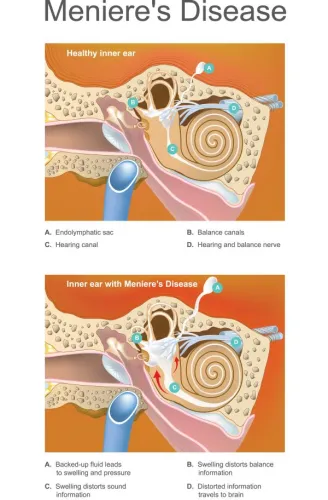
Question: Our otolaryngologists commonly perform transtympanic therapeutic injections. The patient may need a single injection or a series of injections over multiple months. How is this reported and what are key coding considerations? North Carolina Subscriber Answer: Providers often administer transtympanic therapeutic injections for conditions such as sudden sensorineural hearing loss and severe cases of vertigo, usually due to Meniere’s disease, a chronic condition caused by a build-up of pressure in the inner ear due to excess fluid. To perform the procedure, the otolaryngologist will use a needle to inject the drug through the tympanic membrane; the provider might also make an incision into the labyrinth (the inner ear) and instill one or more drugs, such as a steroid or an antibiotic, through the tympanic membrane. For either procedure, you’ll report one code — 69801 (Labyrinthotomy, with perfusion of vestibuloactive drug(s), transcanal) — for each separate encounter/instillation (separate ear, separate day). When the provider opts to inject the drug with a needle through the tympanic membrane, you’ll just report the code on its own. Adding modifier 52 (Reduced services) to 69801 isn't necessary. Remember: Per CPT® instructions, do not report 69801 more than once per day and avoid using it in conjunction with 69420 (Myringotomy including aspiration and/or eustachian tube inflation), 69421 (… requiring general anesthesia), 69433 (Tympanostomy (requiring insertion of ventilating tube), local or topical anesthesia), and 69436 (… general anesthesia) when performed on the same ear. Don’t forget the drug: You should also submit a drug code for each injection, such as Decadron® (J1100), Depo-Medrol® (J1020–J1040), Solu-Medrol® (J2920 J2930), or gentamicin (J1580). Make sure to indicate the number of units for the drug amount instilled into the inner ear. It’s important to note that 69801 has a 0-day global period, so you can bill for the procedure and drug(s) each time the provider performs a transtympanic injection/instillation into the inner ear, which is often once a month for three months. As always, ensure the documentation fully supports your provider’s treatment rationale and the codes submitted on the claim. Be prepared to send clinical notes if the claims examiner needs further information to process the claim. Bruce Pegg, BA, MA, CPC, CFPC, Managing Editor, AAPC