Pay Attention to Code Notes to Correctly Report Diabetic Ulcer Cases
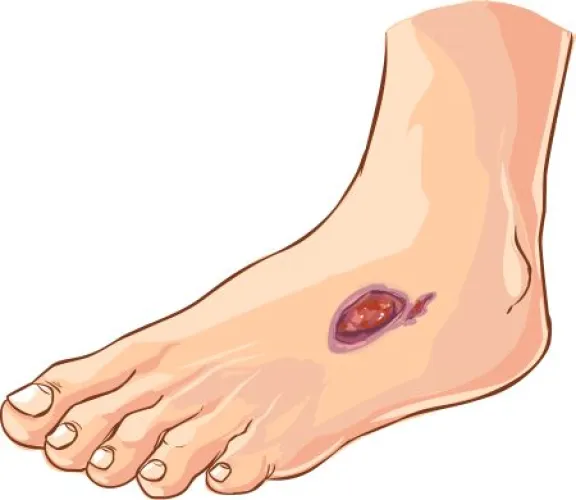
Question: I have a report for an encounter with a patient with type 2 diabetes who has had an ulcer on the top of their left foot for about eight weeks. The ulcer measured 1.4 cm x 1.0 cm x 0.3 cm and the subcutaneous tissue was exposed. The patient was also experiencing peripheral neuropathy. Following a physical examination, the podiatrist used a #15 blade and curette to debride the ulcer. How should I report the encounter? Kansas Subscriber Answer: Use 11042 (Debridement, subcutaneous tissue (includes epidermis and dermis, if performed); first 20 sq cm or less) to report the ulcer debridement. The ulcer measured 1.4 sq cm, and 11042 covers a wound measuring up to 20 sq cm. Next, you’ll assign the appropriate ICD-10-CM diagnosis codes. In this case, the patient has type 2 diabetes and an ulcer on the foot. Assign E11.621 (Type 2 diabetes mellitus with foot ulcer) to report this condition. This code also features a Use additional code note that instructs you to report a code that identifies where the ulcer is located. Use L97.522 (Non-pressure chronic ulcer of other part of left foot with fat layer exposed) to specify that the patient’s ulcer occurred on the left foot and exposed the fatty tissue under the outer skin layers. Additionally, if the documentation contains information regarding how the patient is controlling the diabetes, you’ll use an additional code to identify that method. Examples of this include: Mike Shaughnessy, BA, CPC, Production Editor, AAPC