Patients on GLP-1s? Clarify Coding, BMI Reporting Rules, and Payer Scrutiny
Here’s why assigning E66.9 when the doctor documents ‘BMI 32.1’ is incorrect. When you code encounters involving obesity management and GLP-1 receptor agonist therapy, you deal with one of the most closely scrutinized areas in outpatient coding. Payers increasingly review these claims because obesity diagnoses affect reimbursement, risk adjustment, and medication coverage decisions. Your documentation review skills matter here: You must ensure that diagnosis assignment, body mass index (BMI) reporting, and medication use all align with provider intent and payer policy. This topic sits at the intersection of clinical documentation, ICD-10-CM classification rules, and drug coverage policy. Small documentation gaps often lead to denials or recoupments, especially when GLP-1 medications appear in the plan of care. Recognize When You Can Code Obesity as a Diagnosis You can assign an obesity diagnosis only when the provider clearly documents it as an active condition being evaluated, monitored, or treated, but coders cannot infer obesity based on BMI alone. The provider must explicitly establish clinical meaning, such as obesity as a diagnosis, overweight with clinical relevance, or morbid or severe obesity requiring intervention. You should never assign an obesity code solely from a BMI value. The BMI supports the diagnosis, but it does not replace it. ICD-10-CM obesity-related codes include: When documentation states “BMI 38, no further assessment,” you cannot assign an obesity diagnosis unless the provider links that BMI to a condition. You strengthen accuracy when you look for clinical context such as dietary counseling, pharmacologic therapy, or comorbidities like hypertension or sleep apnea. Apply BMI Codes Only When Documentation Supports Reporting You may assign BMI codes from the Z68 category only when the provider documents the BMI value in the medical record. These codes support clinical context but never function as primary diagnoses. Examples include: You must follow ICD-10-CM’s sequencing rules: You also need to confirm that the BMI comes from the same encounter or that the provider clearly incorporates it into the visit assessment. Do not pull historical BMI values forward unless documentation supports continuity. BMI codes support risk adjustment models, but payers increasingly review them for overuse when not tied to a documented condition. Differentiate Obesity, Overweight, and ‘BMI-Only’ Documentation You may see documentation that lists BMI without interpretation, which creates one of the most common coding errors in this area. You should distinguish BMI as a numeric measurement, obesity as a diagnosed condition, and overweight as a clinical classification. If the provider documents only “BMI 32.1,” you cannot assign E66.9. Instead, you may assign Z68.32 (Body mass index [BMI] 32.0-32.9, adult), if documented. If the provider documents “Obesity, BMI 32.1,” you may assign E66.09 and Z68.32. This distinction matters because obesity diagnoses often drive medication coverage decisions, especially for GLP-1 therapy. Interpret GLP-1 Therapy Documentation Correctly When long‑term use is clearly documented, assignment of a Z79 code depends on the indication. Code Z79.85 (Long‑term use of non‑insulin antidiabetic drugs) is appropriate only when the GLP‑1 is prescribed for diabetes management. Do not report the code when the medication is used solely for weight management without a diagnosis of diabetes. In those cases, no Z79 code is required; however, you may consider Z79.899 (Other long‑term drug therapy) if chronic use is clearly supported and there isn’t a more specific Z79 category that applies. Coders should not assign any Z79 code when documentation reflects a one‑time prescription or trial use, or it lacks evidence of ongoing therapy. Clear linkage between the medication and a documented diagnosis remains essential for accurate and defensible coding. Assign CPT® and HCPCS Codes Based on Drug Delivery Method You do not typically use CPT® codes to report GLP-1 drug products themselves. Instead, you report administration or drug supply using HCPCS Level II codes when appropriate. Common HCPCS codes include J3490 (Unclassified drugs) and J3590 (Unclassified biologics). These apply when no specific HCPCS code exists or when payer policy requires miscellaneous drug reporting with National Drug Code (NDC) submission. For administration services, when the provider administers an injection in a clinical setting, you may report 96372 (Therapeutic, prophylactic, or diagnostic injection (specify substance or drug); subcutaneous or intramuscular). However, many GLP-1 medications used for weight loss are self-administered at home. In those cases, you should not report an administration code. On your claim, you must verify site of service (office versus home use), payer policy on drug billing, and NDC reporting requirements. This is important because incorrect application of administration codes often triggers audits. Follow Payer Rules That Target GLP-1 and Obesity Claims You should expect increased payer scrutiny for any claim involving GLP-1 therapy combined with obesity diagnoses. These medications carry high cost and high utilization risk, so insurers often require strict documentation. Common denial triggers include: Payers frequently request: You improve claim success when you ensure the record clearly demonstrates medical necessity rather than cosmetic or convenience-based use. Know What Correct Documentation Looks Like You strengthen compliance when you can distinguish clearly between adequate and inadequate documentation. For example, if a provider documents: “Morbid obesity due to excess calories. BMI 37.4. Patient failed structured diet and exercise program. Initiated semaglutide for weight management,” then the appropriate ICD-10-CM coding may include: This combination aligns the diagnosis, BMI, and documented treatment intent without misclassifying the medication as antidiabetic therapy, supporting compliant and audit‑defensible reporting. Suzanne Burmeister, BA, MPhil, Medical Writer and Editor
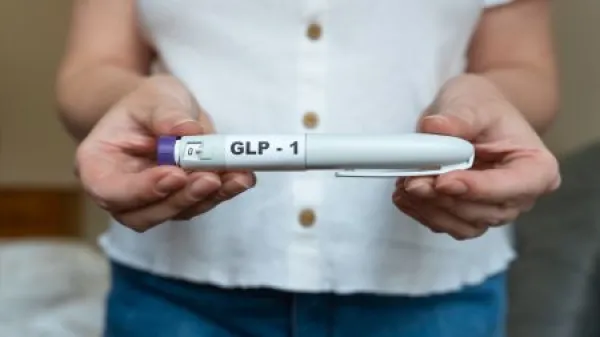
GLP‑1 receptor agonists such as semaglutide and tirzepatide are used in both diabetes management and weight management. Because ICD‑10‑CM does not code medications directly, coders must rely on provider-documented treatment intent to determine appropriate reporting. The presence of a GLP‑1 alone does not justify assignment of a long‑term drug therapy code. Instead, coders should first identify via the documentation the underlying condition being treated (for example, type 2 diabetes mellitus or obesity), and then determine whether documentation supports ongoing (long‑term) use of the medication.