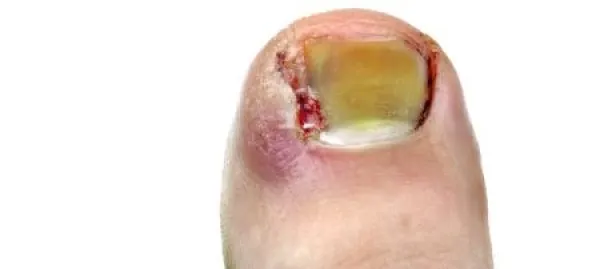
Check Matrix Involvement When Making Avulsion/Excision Decision
Question: When the emergency department (ED) physician removes a patient’s toenail, what is the correct CPT® code for the procedure? Montana Subscriber Answer: The correct answer depends on the extent of the removal, and whether the surgery ensures that the nail won’t grow back. There are a pair of techniques that a physician can use to remove all or part of a patient’s toenail. The first is avulsion, which is the removal of a portion or all of the toe’s nail bed. The ED physician leaves the nail matrix and nail bed intact. When the physician performs toenail avulsion, the nail will usually grow back, as the nail matrix generates tissue for regrowth. For toenail avulsions, report 11730 (Avulsion of nail plate, partial or complete, simple; single) for the first avulsion and +11732 (… each additional nail plate (List separately in addition to code for primary procedure)) for any additional avulsions performed during the same session. Also, remember the appropriate modifier from the TA (Left foot, great toe) through T9 (Right foot, fifth digit) set to indicate which toe the physician treated. The second technique the physician might use for toenail removal is excision of the nail and the nail matrix. During this procedure, the physician “removes part or all of a fingernail or toenail, including the nail plate and matrix and including the lunula if the excision is complete,” per AAPC’s Codify. The removal of the nail matrix ensures that the nail will not regrow. For excisions of the nail and the nail matrix, report 11750 (Excision of nail and nail matrix, partial or complete (eg, ingrown or deformed nail), for permanent removal). Also, remember to include a TA-T9 modifier to indicate the affected toe(s). Chris Boucher, MS, CPC, Senior Development Editor, AAPC