Code All Services Correctly on TDA Revision/Replacement Coding, Part 2
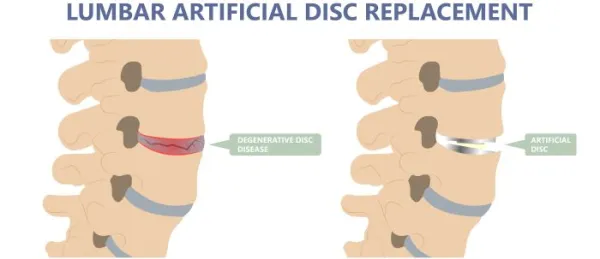
Be specific in your documentation for these surgeries. Last month, we looked at total disc arthroplasty (TDA) revisions and replacements. Specifically, we examined how the neurosurgeon arrives at the decision to perform a TDA revision/replacement. This month, we’ll complete the picture of TDA revision/replacement by looking at codes for the procedures, documentation strategies, and other coding opportunities these surgeries might present. Read on to get the full picture of TDA revision/replacement coding. Count on These Codes for TDA Removals and Revisions When the surgeon revises or removes a TDA, you’ll report one of the following codes, depending on encounter specifics: When coding a TDA revision/replacement, remember to check for any coding opportunities concerning services such as grafts, instrumentation, and cages. Some of the codes that could accompany a TDA revision/replacement include the following: Remember: These are all add-on codes, so there is no need for a modifier to show that they were separate procedures from the TDA replacement/revision. Keep Tabs on TDA Removal-Fusion Connection Codes 22864 and 22865 describe the removal of a TDA. Unlike revision codes 22861 and 22862, where a device is replaced with a new one at the same time, these codes represent a pure explantation of a failed artificial disc from the cervical or lumbar region. Because a motion-preserving implant is being entirely removed without a replacement, this procedure is almost universally paired with a conversion to an interbody fusion to stabilize the spine and disallow any further movement of the spine at that area. Lumbar fusion in addition to the TDA removal is considered an anterior lumbar interbody fusion (ALIF). So, you would report 22865 for the artificial disc removal and +22558 (Arthrodesis, anterior interbody technique, including minimal discectomy to prepare interspace (other than for decompression); lumbar) for the ALIF. For cervical fusion in addition to the TDA removal, you would report 22864 for the artificial disc removal and 22554 (Arthrodesis, anterior interbody technique, including minimal discectomy to prepare interspace (other than for decompression); cervical below C2) for the minimal discectomy. You cannot code for a total discectomy (22551 [Arthrodesis, anterior interbody, including disc space preparation, discectomy, osteophytectomy and decompression of spinal cord and/or nerve roots; cervical below C2]), as the surgeon would have performed it during the initial TDA. Hit All the Documentation Points for Your Claim Because payers require explicit evidence of implant failure rather than routine degeneration, the documentation should include the following: The operative note should also confirm removal of the superior and inferior endplates and the core or insert, and clearly identify the replacement. Placement of a new artificial disc supports revision coding (22861 or 22862), whereas placement of a cage or graft supports removal coding (22864 or 22865) with the applicable fusion base codes. Treat the above documentation examples strictly as suggestions. Insurance requirements for spinal procedures — from operating room surgeries to in-office injections — vary widely by payer. Always verify specific criteria directly with your payer, as rules are rarely universal. Spine coding claims should always include the following elements: Make note: Inconsistencies in the documented level or approach may result in claim rejection. Jessica Sullivan, CPC, COBGC, COSC, Consultant,
Pinnacle Enterprise Consulting Services (PERCS)