Dive Deep Into Hysteroscopy Coding With This Guide – Part 1
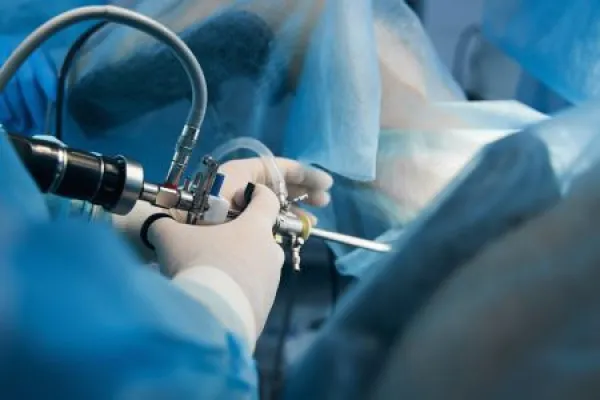
Why knowing when — and how — to report each code can be tricky. Hysteroscopy procedures offer both diagnostic and surgical solutions for a range of gynecological conditions, and each one comes with its own coding nuances. The CPT® code range 58558-58565 (Hysteroscopy, surgical …) includes procedures such as: For medical coders, accurately assigning the right code means understanding not only what was done, but why and how. Was it a diagnostic scope or a full surgical intervention? Did the ob-gyn remove fibroids, polyps, or both? Was the procedure bilateral or only partially completed? This two-part series breaks down each code in the 58558-58565 range, offers key terminology to spot in the documentation, and walks you through real-world coding scenarios to help you code with precision and confidence. When to Report CPT® 58558 for Retained Products of Conception You should use code 58558 (Hysteroscopy, surgical; with sampling (biopsy) of endometrium and/or polypectomy, with or without D & C) when the provider performs a surgical hysteroscopy that includes any of the following: Look in your documentation for phrases like: Watch out: While this technique may be used to remove retained products of conception (RPOC), you need to be cautious about when it is appropriate to report this code. For instance, if the procedure is addressing an incomplete abortion, 58558 is not the correct choice, even if your ob-gyn uses a hysteroscope. Here’s why: In cases where a patient is still within the incomplete abortion stage, the appropriate CPT® code is 59812 (Treatment of incomplete abortion, any trimester, completed surgically). This remains true even if the ob-gyn uses a hysteroscope to assist with removal. The diagnosis code should reflect incomplete abortion, not missed abortion (e.g., O03.4 [Incomplete spontaneous abortion without complication] instead of O02.1, [Missed abortion]). If the provider documents significantly increased work due to the hysteroscopic approach, modifier 22 (Increased procedural service) may be added to 59812. You should look for key terms in documentation such as “incomplete abortion,” “retained products,” “hysteroscopic removal,” or “continued bleeding.” If the documentation lacks a clear, nonobstetrical indication like endometrial sampling or polypectomy, 58558 is unlikely to be justified. However, many coders wonder, is it possible to report 58558 for RPOC? The answer is yes. There are limited scenarios where you could report 58558 for RPOC, such as when the procedure is performed more than 90 days after the initial abortion and is considered treatment of a sequela, not part of the original event. In such cases, use of O94 (Sequelae of complication of pregnancy, childbirth, and the puerperium) and a symptom-based diagnosis (e.g., N93.8 [Other specified abnormal uterine and vaginal bleeding]) may support 58558 or even 58120 (Dilation and curettage, diagnostic and/or therapeutic (nonobstetrical)). Bottom line: Hysteroscopic technique alone doesn’t justify 58558. Focus on timing, clinical status, and provider documentation. If the abortion is still incomplete, stick with 59812. Only consider 58558 if the clinical scenario is clearly outside the obstetrical context. Zero In on 58559 for Hysteroscopic Lysis of Adhesions CPT® code 58559 (… with lysis of intrauterine adhesions (any method)) is commonly used for treating conditions like Asherman’s syndrome or uterine synechiae, often linked to infertility. Accurately reporting this code depends on the documented clinical indication and ensuring it isn’t mistakenly linked to diagnoses that may trigger mismatches or denials, especially in postpartum cases. In a case where a patient undergoes hysteroscopy with lysis of adhesions and D&C, and the pathology incidentally reveals a placental site nodule from a delivery two years ago, your diagnosis coding must focus on the current clinical reason for the procedure. Suppose that even though placental tissue was found, the ob-gyn clarified the surgery was not done due to suspected retained products but for infertility and Asherman’s syndrome. In this case, the correct ICD-10-CM codes would be N85.6 (Intrauterine synechiae) and possibly N97.2 (Female infertility of uterine origin) rather than O73.1 (Retained portions of placenta and membranes, without hemorrhage) or O94, which relate to recent postpartum conditions. When reporting 58559, look in your documentation for phrases, such as: Key: These terms point to a nonobstetric indication for hysteroscopic intervention, supporting the use of 58559. Example: A patient with a history of difficult manual placenta removal during delivery two years prior presents with secondary infertility. Hysteroscopy reveals significant intrauterine adhesions, which are lysed. Curettage is performed, and pathology notes trophoblastic remnants. While remnants of prior pregnancy are noted, the purpose of the procedure is not to treat a postpartum complication. Therefore, 58559 is reported, along with 58558 appended with modifier 51 (Multiple procedures) for the D&C and sampling; ICD-10-CM codes N85.6 and N97.2 are the appropriate diagnoses. Watch out: When coding procedures like this, always align the diagnosis with the intent of the surgery, not incidental findings. Be cautious of automatic bundling alerts from coding software that may flag codes like 58558 and 58559 as bundled, even when National Correct Coding Initiative (NCCI) edits do not prohibit reporting both. For Hysteroscopic Resection of Uterine Septum, Choose 58560 Use 58560 (… with division or resection of intrauterine septum (any method)) when a provider performs a hysteroscopic procedure to correct a uterine septum — often due to recurrent pregnancy loss, infertility, or abnormal uterine anatomy. Unlike general lysis of adhesions, resection of a septum is a distinct and separately reportable procedure. Keep in mind: In a scenario where the ob-gyn performed both a septum resection and lysis of intrauterine adhesions during the same session, you should report both 58560 and 58559. These codes are not bundled under NCCI edits, so they can be billed together without modifiers, provided the ob-gyn’s documentation clearly supports both procedures. Be cautious with any laparoscopic guidance used during the hysteroscopic resection. While it may assist the surgeon in avoiding complications such as uterine perforation, most payers do not separately reimburse for laparoscopy when used solely for guidance. However, if the laparoscopy is diagnostic and supported by a medically necessary indication — such as pelvic pain or suspected uterine trauma — you can report a separate diagnostic laparoscopy code with appropriate diagnosis codes. Look in your documentation for terms like: Example: A patient with a history of two miscarriages undergoes hysteroscopy. The provider documents both lysis of adhesions due to Asherman’s syndrome and resection of a uterine septum. A laparoscope is used for uterine safety, but no additional pathology is found. In this case, report 58559 and 58560, and do not report the laparoscopy separately unless a diagnostic purpose is clearly supported. In summary, you should report 58560 when the surgical focus is the correction of a uterine septum. When paired with other hysteroscopic procedures like lysis of adhesions, be sure to code each procedure individually and base any additional services like laparoscopy on medical necessity — not surgical convenience. Next month, Revenue Cycle Insider will examine how to code the removal of fibroids, impacted intrauterine devices (IUDs), and endometrial ablation via hysteroscopy. Suzanne Burmeister, BA, MPhil, Medical Writer and Editor