
Consider These 5 Coding Tips to Bolster Your Brain CT Billing
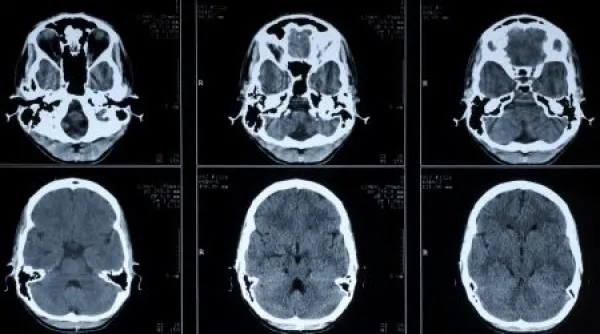
Recognize the difference between high and low osmolar contrast. Diagnostic radiology or diagnostic imaging CPT® codes are simple by nature, but do present their own challenges and nuances. One such code range includes brain CT scan codes. Correctly reporting brain CT scans with or without contrast and showing the medical necessity for the procedure can help your radiology practice’s bottom line. Let’s discuss a potential real-life scenario and review the documentation requirements and coding options along the way. Scenario: A senior patient presents to their physician with memory loss and confusion. Following a patient history and examination, cognitive tests, labs, and any additional evaluations deemed appropriate, the physician orders a brain CT scan. Consider the Documentation Requirements The treating provider must complete an order for nonhospital patients, and the order can be communicated in a variety of acceptable formats: Per the Medicare Benefit Policy Manual, Chapter 15, section 80.6.1, “While a physician order is not required to be signed, the physician must clearly document, in the medical record, his or her intent that the test be performed.” The treating provider’s medical record must also clearly support medical necessity for the ordered test and documentation supporting intent must be authenticated. Scenario (cont.): The patient then presents to a testing facility to receive the brain CT. The testing facility should ensure a copy of the order and medical necessity documentation have been received prior to rendering the imaging service. This is critical to the testing facility. If a Medicare Administrative Contractor (MAC) or other Centers for Medicare & Medicaid Services (CMS) contractor requests documentation, the request will go to the testing facility, which is responsible for providing the information since it will submit a claim for the diagnostic radiology service. Consider the CPT® Code Options When you’re looking for codes related to diagnostic imaging of the brain, CPT® codes 70010-70559 for diagnostic radiology or diagnostic imaging, procedures of the head and neck are the right place to start. The codes in this section continue to break down by imaging modality and the specific imaging location. For a brain CT, choose from the following code options: While the CPT® code options offer a straightforward process of identifying whether documentation supports use of contrast materials, there are additional items to contemplate. Consider the Modifier Options Many imaging services include both technical and professional components. The portion of the imaging service performed will dictate which modifier, if any, should be appended to the CPT® code. The following options are available for brain CTs, which include both components: You should also consider supervision requirements when billing an imaging service’s technical component. Diagnostic tests that are reimbursed under the Medicare Physician Fee Schedule (MPFS) need to be performed with a certain level of physician supervision. For example, 70450 has an indicator of 01 in the MPFS database, which means the “Procedure must be performed under the general supervision of a physician.” Meanwhile codes 70460 and 70470 have indicators of 02, meaning the “Procedure must be performed under the direct supervision of a physician, independent psychologist or a clinical psychologist.” No modifier: You won’t append a modifier to represent the global component, which is when the same entity performs the test and interprets the results. Consider the Use of Contrast Per the Noridian and Palmetto local coverage determinations (LCDs) related to CT scans of the head (>LCD L37373, >LCD L35175, and >LCD L34417), the use of contrast is generally indicated to: While contrast may or may not be necessary for a patient presenting with confusion and memory loss, if documentation supports the need for contrast, there are certain factors to keep in mind. According to the CPT® Radiology Guidelines, “The phrase ‘with contrast’ used in the codes for procedures performed using contrast for imaging enhancement represents contrast material administered intravascularly, intra-articularly, or intrathecally. … Oral and/or rectal contrast administration alone does not qualify as a study ‘with contrast.’” If oral or rectal contrast is administered, report 70450 for a brain CT scan without contrast material. Documentation should include the route of administration as well as the type and quantity of contrast, when utilized. Chapter 13, Section 30 of the Medicare Claims Processing Manual explains the appropriate reporting of contrast material for nonhospital patients. High osmolar contrast is included in the payment for codes indicating “with contrast”; however, you’ll report an appropriate HCPCS Level II code if adequate supporting documentation is available when low osmolar contrast media is administered. The correct code is selected based on the iodine concentration and a unit is reported for each milliliter (ml) administered: Consider the Diagnosis Codes The local coverage articles (LCA) should be reviewed for diagnosis codes that support medical necessity for the CT scan. The diagnosis codes within the LCAs are the ones the individual MACs consider covered indications for the diagnostic test. You should also consider ICD-10-CM official guidelines when selecting the diagnosis codes. Section I.B.18 of the guidelines state, “If a definitive diagnosis has not been established by the end of the encounter, it is appropriate to report codes for sign(s) and/or symptom(s) in lieu of a definitive diagnosis.” For the physician who ordered the brain CT, diagnosis codes representing the symptoms of confusion and memory loss would be reported along with the appropriate evaluation and management (E/M) code. You should also consider section IV.K, which states, “For outpatient encounters for diagnostic tests that have been interpreted by a physician, and the final report is available at the time of coding, code any confirmed or definitive diagnosis(es) documented in the interpretation. Do not code related signs and symptoms as additional diagnoses.” Remember: As explained in section IV.H of the guidelines, if any language indicating uncertainty of the diagnosis is present, signs or symptoms should be reported instead. The following diagnosis codes should be reviewed for use when the provider diagnoses confusion, memory loss, or Alzheimer’s disease: Be sure to also review any Excludes, Use additional code, and Code also notes associated with the diagnosis codes. Scenario (cont.): The patient returns to their physician who reviews the brain CT results, which showed atrophy of the cerebral cortex, suggestive of Alzheimer’s disease. The patient is advised to consult with a neurologist for further evaluation and treatment. Final Thoughts The information in this article is specific to CMS requirements for a nonhospital patient. Requirements may vary depending on setting and payer. Be sure to review requirements relevant to hospital patients and check specific payer policies. Lori Carlin, CPC, COC, CPCO, CRC, CCS, Principal-Professional Audit,
Coding & Education Services, Pinnacle Enterprise Risk Consulting Services
