• If this is your first visit, be sure to check out the FAQ & read the forum rules. To view all forums, post or create a new thread, you must be an AAPC Member. If you are a member and have already registered for member area and forum access, you can log in by clicking here. If you've forgotten the password it can be reset on our sign in section by entering your registered Email Address or Username here. To start viewing messages, select the forum that you want to visit from the selection below..

Wiki MUTUALLY EXCLUSIVE

arytell

New
Messages
1
Location
Hollidaysburg, PA
Best answers
0
I've been getting a handful of denials from Humana about ICD-10 codes not being appropriate when billed together. I assume it's due to not being mutually exclusive codes. However, N183.2 (renal disease), E83.52 (hypercalcemia), N25.81 (secondary hyperparathyroidism of renal origin), and E55.9 (vit D def) are all very different diagnosis. This is just an example of one patient but there have been a few different ones with different diagnosis. My question is, how can I tell if they are mutually exclusive for billing? It's not like its diabetes type 1 and 2 that counter each other. Any advice would be appreciated.
 
I've been getting a handful of denials from Humana about ICD-10 codes not being appropriate when billed together. I assume it's due to not being mutually exclusive codes. However, N183.2 (renal disease), E83.52 (hypercalcemia), N25.81 (secondary hyperparathyroidism of renal origin), and E55.9 (vit D def) are all very different diagnosis. This is just an example of one patient but there have been a few different ones with different diagnosis. My question is, how can I tell if they are mutually exclusive for billing? It's not like its diabetes type 1 and 2 that counter each other. Any advice would be appreciated.

You need to check the Excludes notes for the diagnosis codes on your claim.

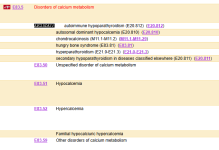
For example, hyperparathyroidism is known to cause high blood calcium levels, which is why you wouldn't typically code both together. Hypercalcemia has an Excludes1 note with most of the codes for hyperparathyroidism and secondary hyperparathyroidism.

Interestingly enough though, I don't see the N25.81 Secondary Hyperparathyroidism specifically listed in that Excludes note. (At least, not in Encoder Pro—I'm not looking at an ICD-10-CM book) Not sure if it was intentionally omitted or just left out in error. It could still be why Humana is denying it - you never know with them.

At any rate, any time you get a denial for a diagnosis conflict, the first thing you should start checking is the Excludes notes. As a general rule, that would help you determine whether 2 diagnosis codes could potentially be considered mutually exclusive.


1730735752387.png
 
Top