Recognize Accurate 3D Rendering Documentation to Report 76376 and 76377
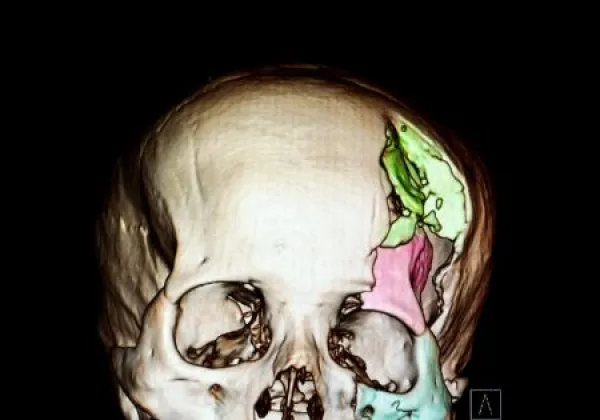
Find out which procedures include 3D rendering. The 3D rendering CPT® codes took effect Jan. 1, 2006, and two decades later, coders still send the same questions up the chain: When the report does not say what was done, where it was done or why, and who directed it, the coder cannot assign a 3D rendering code, and an auditor won’t accept one. Learn what to look for in the documentation so you can accurately report these procedures. Identify 3D Rendering vs. Routine Reformats Since 2006, 2D reconstructions (coronal, sagittal, multiplanar, and oblique reformats) have been included in the base CT and MRI codes. 3D rendering builds a volume from the source data and displays it with depth. According to CPT® Assistant, Volume 15, Issue 12, and Clinical Examples in Radiology, Volume 2, Issue 1, qualifying 3D techniques include maximum intensity projection (MIP), shaded surface rendering, volumetric rendering, fusion of images from other modalities, and quantitative analysis such as segmental volumes and surgical planning. The AMA notes the list is not all-inclusive. The radiologist does not have to name a specific technique. Documenting “3D rendering” or “3D images” is sufficient, and a named technique such as MIP can replace the term 3D. If the report says only “multiplanar reformats” or “sagittal and coronal reconstructions,” there is no 3D code to assign. Get to Know 76376 and 76377 — Where the Work Happens Both 3D rendering CPT® codes describe the procedure with interpretation and reporting under concurrent supervision. The difference is the equipment: 76377 (3D rendering with interpretation and reporting of computed tomography, magnetic resonance imaging, ultrasound, or other tomographic modality with image postprocessing under concurrent supervision; requiring image postprocessing on an independent workstation) requires image postprocessing on an independent workstation, and 76376 (… not requiring image postprocessing on an independent workstation) does not. CPT® Assistant, Volume 26, Issue 4, defines an independent workstation as “a separate computer or workstation used for the purpose of three-dimension (3D) reconstruction.” If 3D rendering occurs on the same workstation that processes the 2D images, you’ll report 76376. Recognize That Concurrent Supervision Is Part of the Code Both code descriptors include the phrase “with image postprocessing under concurrent supervision.” Supervision is a required element of the code, so you should not report 3D rendering performed without it. Clinical Examples in Radiology, Volume 15, Issue 4, defines concurrent supervision as “active participation in and monitoring of the reconstruction process,” including the following components: These elements describe what the radiologist does, not where the radiologist sits. Concurrent supervision does not require the physician to be physically present during reconstruction. The American College of Radiology (ACR) states it is unrelated to Medicare’s general, direct, and personal supervision definitions, and Clinical Examples in Radiology, Volume 14, Issue 7, supports reporting 76377 when the independent workstation is remote from the facility and when all requirements are met. What the code does require is active participation and monitoring. A radiologist directing a trained technologist from a reading room across town meets the standard. A radiologist who opens a finished set of 3D images built without any input from the radiologist does not. Because concurrent supervision is built into the code descriptors, the report must state that the 3D images were created under the radiologist’s concurrent supervision. Understand What the Report Needs to Say A report supporting 76376 or 76377 answers the following five questions: Compare the following technique statements: When any element is missing or unclear, query the radiologist and amend the report. Clinical Examples in Radiology cautions that coding from a report missing required information could be problematic in an audit or potentially be construed as fraud and abuse. Know When Not to Report 3D Rendering Some procedures have 3D work valued into the code, and CPT® parenthetical notes prohibit reporting 76376 or 76377 with those procedure codes. These procedures include computed tomography angiography (CTA), magnetic resonance angiography (MRA), cardiac CT and CTA, CT colonography, nuclear medicine including positron emission tomography (PET), and breast MRI. The list has grown since 2006, so check the current CPT® parenthetical notes for exact code ranges. These scenarios also do not qualify for 3D rendering reporting: Master Medical Necessity, Timing, and Payers AMA and ACR guidance say medical necessity should be explicitly documented, usually as a specific request from the referring physician. A hospital radiologist can theoretically order 3D rendering for a Medicare patient; in an independent diagnostic testing facility (IDTF) or other nonfacility setting, the radiologist should not. Citing the potential for abuse and Office of Inspector General (OIG) scrutiny, Clinical Examples in Radiology, Volume 15, Issue 4, calls it safest to leave that decision to the referring physician in every setting. According to CPT® Assistant, Volume 29, Issue 10, you may report 3D rendering performed on a date separate from the base study. Another thing to keep in mind is that CPT® guidance and payer policy are not the same thing. Some commercial payers treat 3D rendering as integral to the primary imaging study and deny separate payment, which is a position that the ACR has publicly challenged. Check each payer’s policy before counting on reimbursement. Fix Documentation Errors in the Template Twenty years of CPT® Assistant questions and answers, Clinical Examples in Radiology scenarios, and ACR guidance keep landing in the same place: the report. The codes haven’t changed. The scanners, software, and remote workflows have, however, and every change brings the old questions back. Coders cannot assign what the radiologist did not document, and a query after the fact is the slowest way to fix it. Build the following five elements into the dictation template: When those elements appear in every report, a 20-year-old coding question finally has a simple answer. Laura Manser, CPC, CPMA, CEMC, CDEO, CIRCC, CPCO, RCC,
Director of Provider Education and Compliance Officer at PBS Radiology Business Experts, Reno, Nevada