

Medical coding career path
Medical coding: Speaking the language of careEntry-level friendly
Start your career journey as a medical coder.
Medical coders play a quiet but essential role in healthcare. They take the details from patient visits — what care was provided and why — and turn that information into standardized codes that help keep everything accurate and organized behind the scenes.
Along this career path, you’ll learn how to read medical records, understand the language of healthcare, and use coding systems like ICD-10-CM and CPT®.
Coding is thoughtful, detail-oriented work that supports both patient care and the smooth operation of healthcare organizations — and it’s a great place to begin a rewarding journey in the healthcare field.

Top skills needed
Attention to detail
Knowledge of medical terminology
Understanding of anatomy and physiology
Analytical thinking
Familiarity with coding systems (ICD, CPT®, HCPCS)
Problem solving
Computer and electronic health record (EHR) proficiency
Ability to work independently
Common medical coding job titles
Medical coder
Coding specialist (inpatient or outpatient)
Coding auditor assistant
Medical records specialist
Documentation specialist
Health information technician
Charge capture specialist
Coding compliance specialist
How to become a medical coder: Step by step
Starting something new can feel overwhelming, but it doesn’t have to be. We’ll guide you through the steps to becoming a medical coder, helping you understand where to start and how to move forward with confidence.
To learn more about the industry, take our free medical coding course: Intro to Medical Coding. By knowing the basics, you'll have a better idea of how to navigate the industry and what's out there waiting for you.
Where to start
You don't need a degree or years of experience to become a medical coder. However, employers do prefer candidates who are certified — proof of the rigorous testing and training that ensures you're ready for the job.
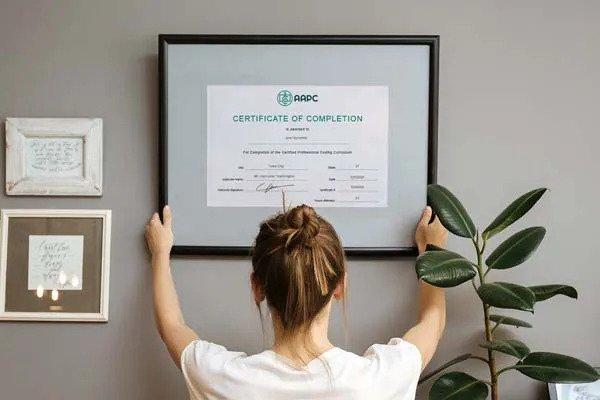
Become a Certified Professional Coder (CPC)®
More than half of working medical coders have launched their careers at AAPC, positioning themselves as proficient and reliable by earning our CPC certification — the most recognized coding credential in the healthcare industry.
Most medical coders begin their careers with the CPC because this certification opens the door to a world of career growth and advancement, offering you the opportunity to continually expand your skills and move into higher roles in the healthcare field. It’s not just training for a certification — it’s the start of a fulfilling, long-term career.
Career tools
Get hired faster using AAPC career tools.
We'll help you stand out in a competitive job market with exclusive resources like resume and cover letter writing, interview prep, job search assistance, externship placement, and more. Let's make sure you get noticed.

Ways you can advance your career
As you gain experience, there are many ways to grow your medical coding career. Plan your next move.
Expand your coding expertise
Focus on specific coding environments such as outpatient, inpatient, or risk adjustment coding. Each setting requires a unique skill set and understanding of guidelines, allowing you to deepen your expertise, take on more complex work, and position yourself for higher-paying opportunities.

Move into specialty coding
Specialty coding allows you to apply your skills within a specific medical field, such as ob-gyn, cardiology, or orthopedics. By mastering the codes and regulations unique to a specialty, you become a highly valued expert and often qualify for increased compensation and long-term career stability.

Build dual skills in billing and coding
Combining medical billing and coding can open the door to even more opportunities. By understanding both how services are coded and how claims are billed and paid, you become a more well-rounded healthcare professional.
This added knowledge can make you more valuable to employers, expand the roles you qualify for, and position you for greater responsibility and higher earning potential as your career grows.

Branch into related roles
With advanced certifications and experience, you can move into roles like medical auditing, compliance, or leadership. These positions allow you to oversee accuracy, ensure regulatory compliance, guide best practices, and play a larger role in shaping healthcare operations.

Add to your skillset
Evolve alongside your industry.
Healthcare is constantly changing, so staying relevant means continuing to learn.
Earning continuing education units (CEUs) creates space for you to deepen your expertise, expand the types of work you can take on, and demonstrate your commitment to professional growth. Over time, these added skills can support greater responsibility and career flexibility.
Still have questions?
We had a lot of questions as beginners too. So, we get it and are here to walk you through it all.


