
Revenue Cycle Insider

Neurosurgery Coding:

Know Stroke Types for Accurate Coding

Question: What is the difference between an ischemic stroke and a hemorrhagic stroke?

Texas Subscriber

Answer: It’s an important distinction, as most of the stroke patients your surgeon treats will have one of these stroke types. In order to choose the most appropriate diagnosis codes, you’ll need to understand the basics of both kinds of stroke.

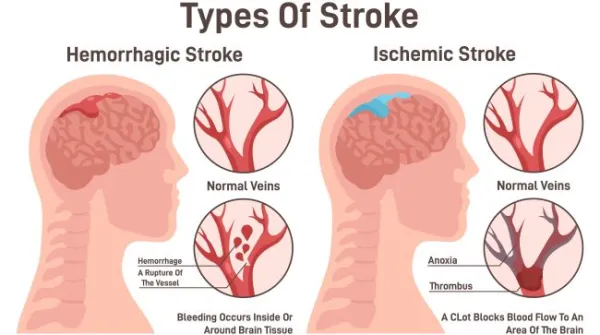
Stroke types set. Hemorrhagic and ischemic brain stroke. Damaged human

An ischemic stroke occurs when there is “too little blood to supply an adequate amount of oxygen and nutrients to a part of the brain,” explained Leigh Poland, CCS, CIC, AHIMA Approved ICD-10-CM/PCS Trainer, RHIA, CDIP, vice president of the Coding Services Line at AGS Health, during a recent webinar. Here’s a look at the types of ischemic strokes:

  • Thrombotic: This can be in situ thrombosis in an intracranial vessel or intracranial atherosclerosis.
  • Embolic: This stroke is “caused by a blood clot that travels from the bloodstream and lodges in a narrow artery in the brain,” said Poland.
  • Lacunar: Also called “lacunar infarct”, this is a small-vessel stroke affecting the deep penetrating arteries in the brain.

A hemorrhagic stroke occurs when there is too much blood within the closed cranial cavity, according to Poland. This often happens when a blood vessel inside the brain leaks. Causes of hemorrhagic stroke include trauma, high blood pressure, vascular malformations, or aneurysm. Here’s a look at the types of hemorrhagic strokes:

  • Intracerebral hemorrhage: The most frequent hemorrhagic stroke; it occurs when the artery inside the brain leaks
  • Subarachnoid hemorrhage: Not as common as an intracerebral hemorrhage; characterized by bleeding that occurs between the brain and the thin tissue that covers the brain (subarachnoid space)
  • Subdural hemorrhage: Blood gathers between the inner layer of the dura mater and the arachnoid mater; usually caused by trauma but can also have nontraumatic causes such as aneurysm, arterial-venous malformation rupture, or coagulopathy
  • Extradural/epidural hemorrhage: Occurs when there is a blood collection between the skull and the dura mater.

Chris Boucher, MS, CPC, Senior Development Editor, AAPC

Other Articles of

September 2026

View All
Subscribe to newsletter